Your kitchen floor bears the brunt of daily cooking messes, tracked-in dirt, and constant foot traffic. Without proper cleaning, grease buildup creates slip hazards while embedded dirt damages flooring surfaces over time. Knowing the most effective scrubbing techniques for your specific floor type transforms this chore from frustrating to efficient. This guide reveals professional-level methods that deliver genuinely clean results—not just surface-level wiping that leaves residue behind. You’ll learn exactly how to remove stubborn kitchen grime while protecting your flooring investment.
Remove All Floor Obstructions Before Cleaning
Clearing your kitchen floor completely before scrubbing prevents wasted effort and ensures thorough cleaning results. Working around obstacles means you’ll inevitably miss spots that accumulate dirt and bacteria over time.
Move Furniture and Appliances Strategically
Begin by relocating chairs, stools, and any movable furniture to another room or against kitchen walls. For deeper cleaning, pull out your refrigerator and stove just enough to access the floor beneath—most modern appliances have enough cord slack for this. Place cardboard or towels under lifted appliance edges to prevent scratching your floor during movement.
As you move items, inspect underneath for hidden spills and crumbs that have been accumulating unseen. These neglected areas often harbor the most concentrated dirt and require extra attention during your scrubbing process.
Eliminate Rugs and Mats Completely
Kitchen rugs and mats trap moisture against your floor surface if left in place during cleaning. Remove all floor coverings and shake them outdoors before washing according to their care instructions. Pay special attention to rubber-backed mats which can discolor vinyl and laminate flooring when left wet for extended periods.
While rugs are removed, check their placement areas for discoloration or residue that needs targeted treatment before proceeding with full-floor scrubbing.
Dry Clean Floor Surface Before Wet Scrubbing
Skipping dry cleaning creates muddy slurry that redistributes dirt rather than removing it. This critical step ensures your scrubbing efforts actually eliminate debris instead of smearing it across your kitchen.
Vacuum High-Traffic Zones Thoroughly
Focus vacuuming efforts on areas near the sink, stove, and entryways where food particles and tracked-in dirt concentrate. Use the crevice tool attachment along baseboards and in corners where crumbs accumulate. For homes with pets, vacuum under cabinets and appliances where fur collects in hard-to-reach areas.
Check your vacuum bag or canister midway through and empty it if more than half full—overfilled vacuums recirculate dust instead of capturing it.
Use Microfiber Dust Mop for Final Dry Pass
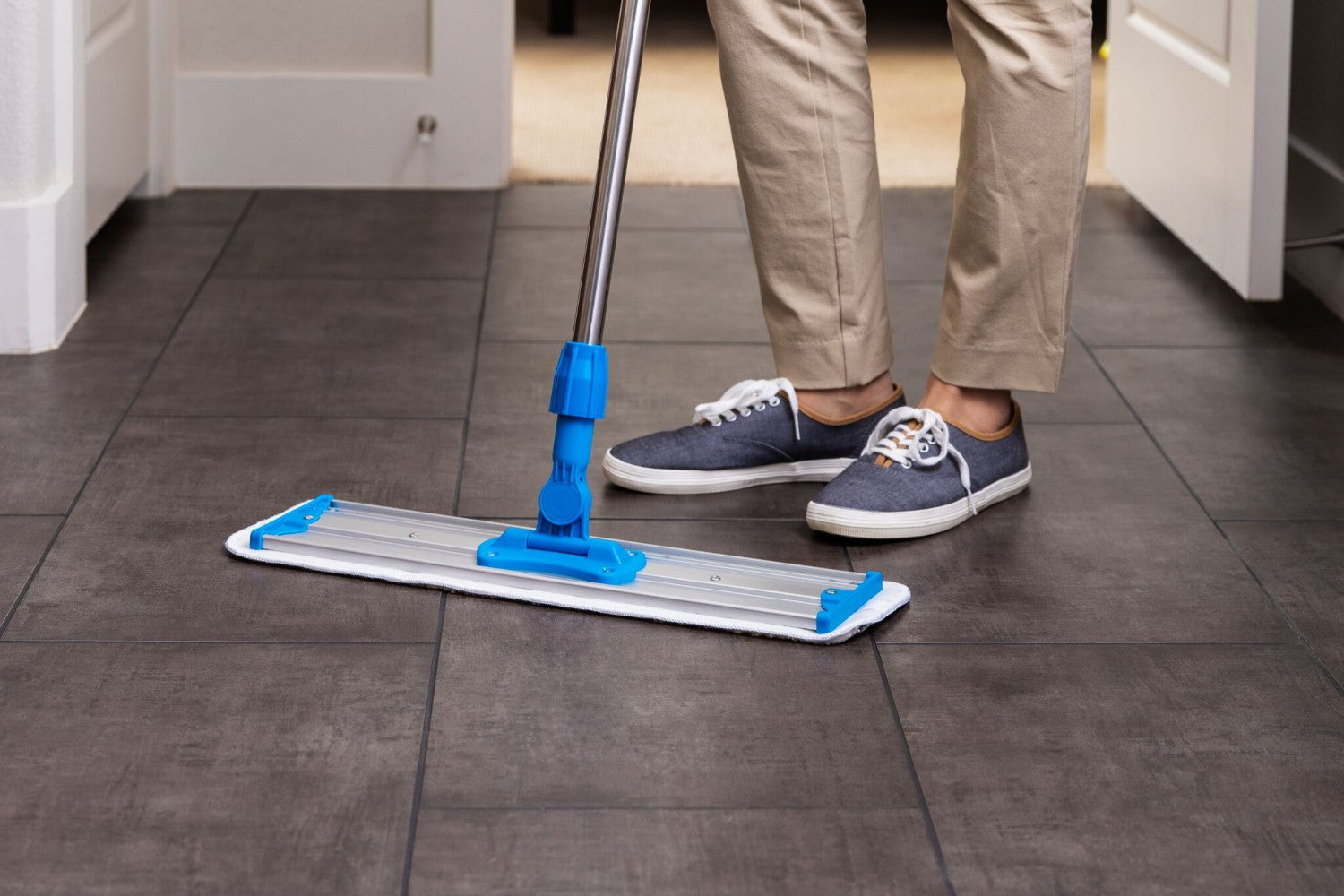
After vacuuming, complete your dry cleaning with a microfiber dust mop that electrostatically attracts remaining particles. Work systematically from the farthest corner toward your exit point to avoid stepping on cleaned areas. The microfiber material captures microscopic dust and allergens regular brooms miss.
Pay particular attention to transition areas between rooms where dirt tracks in from other parts of the house. This final dry pass ensures no loose debris remains to mix with cleaning solution during wet scrubbing.
Select Floor-Specific Cleaning Solution

Using the wrong cleaner damages flooring surfaces while failing to remove kitchen-specific grime. Match your solution precisely to your floor type for maximum effectiveness without causing harm.
Homemade Solution for Tile and Vinyl Floors
Combine one gallon warm water, one-fourth cup white vinegar, and one tablespoon dish soap in a bucket. The vinegar cuts through kitchen grease while the dish soap lifts food particles without leaving residue. Avoid using lemon or other acidic additives on natural stone surfaces as they cause etching.
For extra degreasing power on greasy stovetop areas, add one tablespoon of borax to the solution—this boosts cleaning power without scratching surfaces when properly diluted.
Specialized Formula for Hardwood Floors
Mix one bucket warm water with one-fourth cup plant-based oil soap specifically formulated for wood floors. Never use vinegar solutions on hardwood as the acidity dulls finishes over time. Test any new cleaner in an inconspicuous area first to ensure compatibility with your floor’s finish.
For engineered hardwood, verify manufacturer recommendations—some require moisture-free cleaning methods to prevent veneer separation.
Apply Proper Scrubbing Technique by Floor Type
Generic mopping spreads dirt rather than removing it. Floor-specific scrubbing methods target problem areas while protecting surface integrity.
Two-Step Tile and Grout Cleaning Method
Apply your cleaning solution generously to a four-foot square section, allowing it to dwell for five minutes before scrubbing. This dwell time softens grease and grime for easier removal. Use a microfiber mop with moderate pressure in overlapping figure-eight patterns to lift dirt without scratching.
For grout lines, switch to a stiff-bristled grout brush and work perpendicular to the grout lines with firm pressure. The angled bristles penetrate deep into joints where mold and dirt accumulate.
Gentle Approach for Vinyl and Laminate
Spray cleaner directly onto problem areas rather than soaking the entire floor. Work in three-foot sections using straight, overlapping strokes in the direction of the floor planks. Circular motions create visible swirl marks on these surfaces.
For sticky residues, apply solution and let it sit for two minutes before gently scrubbing with a soft sponge mop—never use abrasive pads that remove protective wear layers.
Eliminate Stubborn Kitchen Floor Stains
Kitchen-specific stains require targeted treatment beyond regular scrubbing. Address these problem areas before mopping the entire floor to prevent setting stains deeper during general cleaning.
Grease and Oil Spatter Removal
Sprinkle baking soda directly onto greasy spots near the stovetop, then spray with white vinegar. Allow the fizzing action to work for three minutes before scrubbing with a soft brush. The baking soda provides gentle abrasion while the vinegar cuts through oil bonds.
For dried-on grease, create a paste of baking soda and water, apply to the area, and cover with a damp paper towel for fifteen minutes before scrubbing.
Food and Beverage Stain Treatment
For berry or tomato-based stains, mix one tablespoon hydrogen peroxide with one teaspoon dish soap. Apply to the stain and let sit for ten minutes before blotting with a clean cloth—never rub, as this spreads the stain.
Coffee or wine spills require immediate attention; blot with a vinegar-water solution (one part vinegar to two parts water) before the stain sets into porous flooring surfaces.
Rinse Floor Thoroughly to Prevent Residue
Residual cleaning solution attracts more dirt and creates slippery surfaces as it dries. Proper rinsing completes the cleaning process and ensures your floor stays cleaner longer.
Two-Bucket Rinsing System
Use two buckets—one with clean water for rinsing your mop and one empty for collecting dirty rinse water. Dip and thoroughly wring your mop in the clean water bucket after every three-foot section. Change rinse water immediately when it becomes cloudy.
For tile floors, perform a second rinse pass with plain water to eliminate any soap film that could attract dirt to grout lines.
Immediate Drying Protocol
Dry your kitchen floor immediately after rinsing to prevent slip hazards and water damage. Start at the farthest corner and work toward your exit point using a clean, dry microfiber mop with absorbent properties.
For tile floors, follow with a dry towel to remove water from grout lines and prevent mineral deposits that cause discoloration over time.
Establish Maintenance Routine for Lasting Results
Daily habits dramatically reduce the need for intensive scrubbing sessions while protecting your flooring investment. Consistent maintenance prevents dirt accumulation that becomes difficult to remove.
Three-Minute Daily Floor Care
Sweep high-traffic areas each evening after dinner preparation to remove food particles before they get ground into the floor. Keep a microfiber dust mop by your back door for quick passes after bringing in groceries.
Address spills immediately with a dry cloth followed by a damp microfiber square—this two-step method prevents staining better than waiting for regular cleaning day.
Weekly Deep Cleaning Schedule
Designate fifteen minutes each weekend for thorough floor cleaning when kitchen activity is lowest. Move small appliances to clean beneath them and focus on problem areas near cooking zones. This regular attention prevents the buildup that requires intensive scrubbing monthly.
Rotate your deep cleaning focus—spend one week concentrating on grout lines, the next on perimeter edges—to maintain complete floor coverage without overwhelming your schedule.
Avoid Critical Scrubbing Mistakes That Damage Floors
Common cleaning errors accelerate floor deterioration while delivering subpar results. Recognize these pitfalls to protect your flooring and maximize cleaning effectiveness.
Never Use These Damaging Products
Avoid steam mops on unsealed wood floors as trapped moisture causes warping and finish damage. Skip ammonia-based cleaners on vinyl flooring which degrade the protective top layer over time.
Never apply undiluted vinegar directly to stone or tile surfaces—this concentrated acid etches finishes and grout joints, creating rough surfaces that trap more dirt.
Stop These Ineffective Techniques
Cease scrubbing with dirty mop water—this simply redistributes grime across your floor. Change rinse water after cleaning each kitchen quadrant for visibly better results.
Discontinue circular mopping motions on wood and laminate floors which create noticeable swirl patterns. Use straight, directional strokes following the floor’s natural pattern for professional-looking results.
Final Floor Scrubbing Protocol for Spotless Results
Mastering the best way to scrub kitchen floor combines preparation, technique, and maintenance into an efficient system. Start with complete floor clearance, execute proper dry cleaning, then apply floor-specific scrubbing methods with appropriate solutions. Target stubborn stains before general cleaning, rinse thoroughly to prevent residue, and dry immediately for safety.
Implement daily spot cleaning and weekly deep maintenance to dramatically reduce intensive scrubbing needs. Avoid damaging products and techniques that compromise your floor’s appearance and longevity. Your kitchen floor withstands constant abuse from cooking messes and foot traffic—treating it with proper care ensures it remains safe, hygienic, and attractive for years to come.