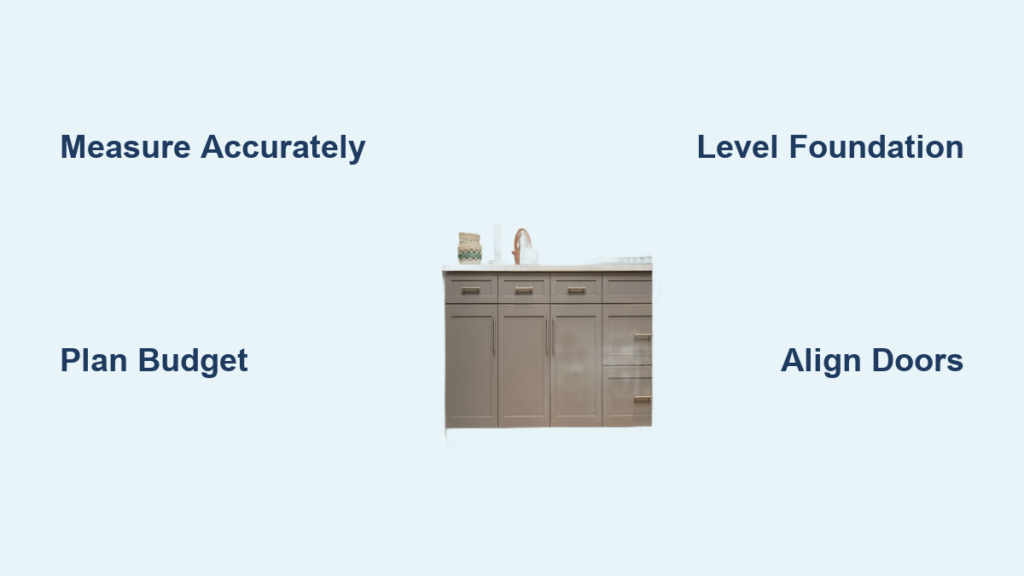
Replacing kitchen cupboards transforms both your cooking space and home value faster than almost any other renovation. When your current cabinets show warping, damaged hinges, or simply no longer match your style, knowing how to replace kitchen cupboards properly ensures professional results without costly mistakes. This guide cuts through the confusion to deliver a clear path from demolition to finished installation—whether you’re tackling the project yourself or preparing to hire professionals.
Most homeowners underestimate the complexity of cupboard replacement until they face unexpected challenges like uneven walls, hidden plumbing, or mismatched dimensions. Rushing into demolition without proper planning leads to cabinets that won’t align, wasted materials, and budget overruns. By following this systematic approach, you’ll avoid common pitfalls and achieve results that look like they came from a high-end kitchen designer.
Before touching a single screwdriver, successful cabinet replacement demands thorough preparation that accounts for your specific kitchen layout, budget constraints, and long-term usage needs. The time invested upfront pays dividends when your new cupboards fit perfectly and function flawlessly for decades.
Plan Your Cabinet Replacement Before Demolition Begins

Skipping proper planning turns cupboard replacement into a costly nightmare. Homeowners who measure twice, budget realistically, and design strategically complete projects 30% faster with fewer surprises.
Measure Your Kitchen Layout and Assess Existing Damage
Start by documenting your current cabinet dimensions with a steel tape measure—never rely on “standard” sizes. Record exact measurements for each base cabinet (typically 34.5-36″ tall) and wall units (usually 12-42″ high), noting any irregularities from previous renovations. Open every door and drawer to check for warping, water damage, or hinge deterioration that might indicate deeper issues.
Identify how your current cabinets attach to walls and each other. Face-frame installations use visible front frames while frameless European cabinets connect directly through side panels. Check for soffits above wall cabinets and note any pipes, outlets, or ductwork that will affect new cabinet placement. Photograph problem areas like water-stained corners or cracked shelves to guide your replacement strategy.
Create a Realistic Budget That Covers Hidden Costs
Cabinet replacement costs often exceed initial estimates by 25-40% when homeowners overlook hidden expenses. Allocate 45% of your budget for cabinet materials, 35% for labor (if hiring professionals), and 20% for contingencies like countertop modifications or electrical adjustments.
Stock cabinets cost $60-$200 per linear foot but require filler pieces for non-standard layouts. Semi-custom options ($150-$500/linear foot) offer better fit for unique spaces with moderate customization. Budget for hardware upgrades ($50-$300 total), countertop adjustments ($1,000-$3,000), and professional installation ($2,000-$5,000) if needed. Always include a 15% contingency—demolition frequently reveals water damage or outdated wiring requiring immediate attention.
Design Your Layout for Maximum Functionality
The most successful kitchen remodels follow the “work triangle” principle connecting refrigerator, sink, and stove. Position base cabinets to support this flow with deep lower units featuring pull-out shelves instead of dead-back storage. Corner cabinets work best with lazy susans or pull-out carousels that maximize otherwise wasted space.
Plan for future lighting integration by marking under-cabinet fixture locations even if installing later. Ensure cabinet heights accommodate your tallest appliances—standard wall cabinets (12-24″ deep) won’t fit above 42″ refrigerators without custom modifications. Sketch your layout using free online tools like SketchUp or Home Designer to visualize traffic patterns before purchasing materials.
Gather Essential Tools Before Removing Old Cupboards

Starting demolition without proper tools leads to damaged walls, wasted time, and safety hazards. Having everything ready prevents mid-project delays that derail momentum.
Assemble Critical Power and Hand Tools
You’ll need a stud finder to locate wall anchors, a laser level for precise alignment, and a drill with cabinet installation bits (confirm screw sizes with your cabinet manufacturer). A circular saw or oscillating tool handles trim modifications around obstacles, while a pry bar (18-24″) removes cabinets without wall damage.
Don’t overlook simple hand tools: multiple tape measures (16′ and 25′), a rubber mallet for gentle adjustments, and clamps to hold pieces during assembly. Always test tools before starting—a dead stud finder battery mid-installation causes hours of delay. Keep spare drill bits and circular saw blades on hand; cabinet materials quickly dull standard blades.
Prepare Safety Gear for Demolition Phase
Protect yourself during demolition with ANSI-approved safety glasses (debris causes 90% of renovation injuries), work gloves with grip palms, and an N95 respirator for older homes with potential lead paint or asbestos. Hearing protection is essential when operating loud tools for extended periods.
Set up a first aid kit within arm’s reach containing bandages, antiseptic wipes, and burn cream. Cover nearby surfaces with 6-mil plastic sheeting secured with painter’s tape to contain dust. Shut off water supply lines under sinks before disconnecting plumbing to prevent accidental flooding during cabinet removal.
Remove Old Cupboards Without Damaging Walls
Demolition seems straightforward until you accidentally pull out drywall anchors or drop a 100-pound cabinet. Following this sequence preserves wall integrity for new installations.
Disconnect Appliances and Clear Cabinet Contents
Begin by removing all items from cabinets, sorting into keep/donate/dispose piles. Label each door and hinge location with masking tape before removal—this saves hours during reinstallation. Photograph all connections before disconnecting plumbing lines, electrical wires, or gas lines to ensure correct reassembly.
Turn off water supply valves under sinks and test faucets to confirm shutoff before disconnecting lines. Place buckets under disconnected pipes to catch residual water. Remove garbage disposals, dishwashers, and range hoods that attach to cabinet structures. For countertops, cut adhesive bonds with a utility knife before prying up laminate surfaces.
Execute Cabinet Removal in Proper Sequence
Always remove wall cabinets before base units to prevent accidental damage to unsupported lower cabinets. Locate connecting screws between adjacent cabinets using a flashlight—most join at side panels with 2.5″ screws every 16″. Insert a pry bar between the cabinet back and wall, applying gentle pressure while supporting the cabinet’s weight.
Work systematically from top to bottom: upper cabinets → sink base → perimeter units → corner cabinets. For base cabinets, remove toe-kick panels first to access mounting screws. Never stand directly beneath wall cabinets during removal—have a helper support each unit while you release mounting hardware. Store removed cabinets vertically to save space in your work area.
Install New Cupboards with Professional Precision
The difference between DIY and professional results lies in meticulous installation techniques. Proper alignment transforms ordinary cabinets into showpiece installations.
Establish Laser-Perfect Reference Lines
Mark a continuous level line around your kitchen at 36″ above the floor for base cabinets (adjust for your specific toe-kick height). Use a laser level to transfer this line across all walls—this accounts for uneven floors that would otherwise cause misalignment. Mark stud locations every 16″ along this line with a pencil.
For wall cabinets, create a secondary reference line at 54″ above the base cabinet line (standard 18″ backsplash height). Verify corner angles with a carpenter’s square—most older homes have corners between 87-93 degrees. Adjust your reference lines to follow the dominant wall plane rather than forcing perfect 90-degree angles that create gaps.
Mount Wall Cabinets First with Stud-Finder Precision
Start installation at the highest point in the room (usually above the refrigerator). Position the first cabinet against your reference line, using temporary support boards nailed to wall studs at exact height. Drive 2.5″ screws through the cabinet back into wall studs—never use drywall anchors for cabinet mounting.
Check alignment with a 4′ level before tightening all screws. Install adjacent cabinets by connecting face frames with 2″ cabinet screws through pre-drilled holes. Maintain consistent 1/8″ gaps between cabinet faces for expansion. Install filler strips immediately after each cabinet to prevent cumulative alignment errors across long runs.
Position Base Cabinets on Level Foundation
Begin at a corner or fixed point like the sink location. Shim base cabinets on uneven floors using tapered wood shims until perfectly level both front-to-back and side-to-side. Secure cabinets to wall studs through the back panel with 2.5″ screws, then connect adjacent units with face-frame screws.
Test cabinet alignment by placing a straightedge across multiple units—any rocking indicates improper shimming. Install toe-kick panels only after confirming all cabinets are level and secure. Leave 1/8″ expansion gaps between cabinets to accommodate seasonal wood movement without visible gaps.
Fix Common Installation Problems Immediately

Even careful installers encounter issues like out-of-square walls or plumbing conflicts. Addressing these during installation prevents costly corrections later.
Correct Gaps from Uneven Walls with Scribe Molding
When cabinets won’t sit flush against walls due to out-of-plumb surfaces, cut scribe molding to match the wall contour. Trace the wall profile onto 3/4″ molding using a compass gauge, then cut along the line with a jigsaw. Nail the molding to cabinet ends with 1″ brad nails, leaving a 1/16″ reveal for caulk.
For gaps under wall cabinets, create custom fillers from matching cabinet material. Measure the gap at multiple points, cut filler to the largest dimension, then sand progressively to match the contour. This creates seamless transitions where walls meet cabinets without visible gaps.
Adjust Misaligned Doors and Drawers for Perfect Operation
Modern hinges offer three adjustment points: up/down, in/out, and depth. Loosen the mounting plate screws slightly, then use the adjustment cams to align doors perfectly with adjacent units. Check alignment with a business card—consistent 1/8″ reveals create professional results.
Drawer alignment requires checking both horizontal and vertical positioning. Adjust glide mounts using the provided hex keys, testing full extension before final tightening. For inset drawers, ensure consistent 1/8″ reveals around all sides by adjusting front mounting screws incrementally.
Maintain Your New Cupboards for Decades of Service
Proper maintenance preserves your investment and prevents premature wear. Simple habits keep cabinets looking new longer.
Establish Cleaning and Inspection Routines
Clean cabinet surfaces weekly with a microfiber cloth dampened with water and mild soap—never use abrasive cleaners that damage finishes. Immediately wipe up spills, especially near sink bases where moisture causes swelling. Every six months, inspect and tighten hinge screws and drawer glides before minor looseness becomes major misalignment.
Lubricate drawer slides annually with silicone-based lubricant—petroleum products attract dust and create sticky residue. Check door alignment quarterly, making micro-adjustments to hinges as seasonal humidity changes affect wood movement.
Replacing kitchen cupboards delivers dramatic transformation when executed with proper planning and technique. By following this systematic approach—from precise measurements through final adjustments—you’ll achieve professional-quality results that enhance both functionality and home value. Whether you tackle the project yourself or hire professionals, understanding these critical steps ensures your new cupboards provide decades of reliable service with that coveted “just installed” look.