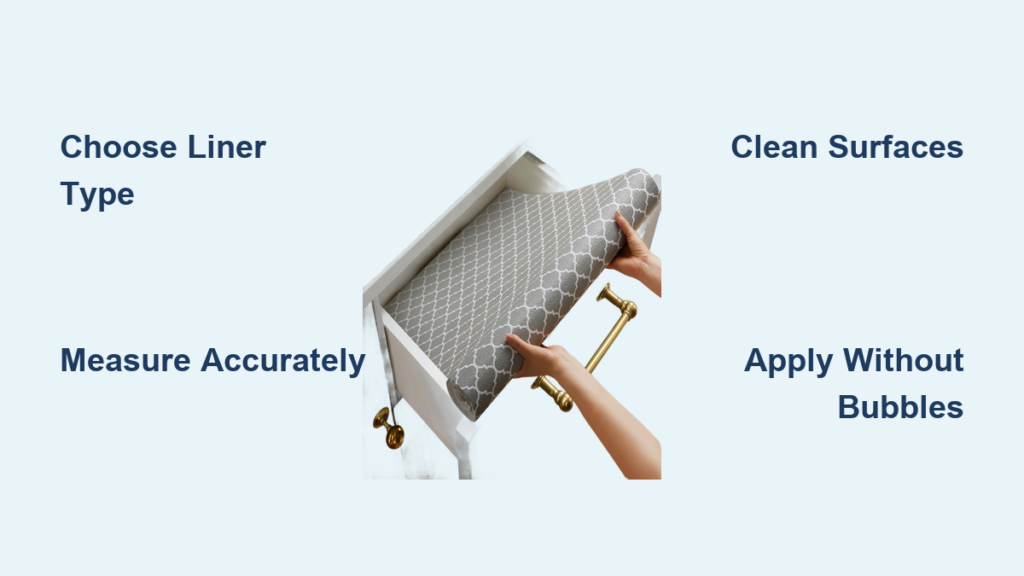
That frustrating clatter of dishes shifting in your cabinets every time you open a door? The sticky residue from spilled sauces seeping into your wooden shelves? Learning how to put liners in kitchen cabinet spaces solves these everyday annoyances while protecting your investment. Properly installed cabinet liners create quieter storage, prevent scratches and stains, and make cleaning spills a simple matter of wiping down a removable surface. This guide cuts through the confusion with precise instructions that deliver professional results on your first attempt—no prior DIY experience required. You’ll discover exactly which liner type works best for each cabinet in your kitchen, avoid the installation mistakes that cause peeling and bubbling, and achieve a clean, finished look that makes your kitchen feel instantly upgraded.
Select the Perfect Liner Material for Each Cabinet

Choosing the right liner material prevents the most common frustration: buying the wrong type and having to start over. Different cabinets demand different solutions based on their contents and location.
Adhesive shelf liners bond permanently to wooden shelves using their sticky backing, making them ideal for upper cabinets storing glassware and dishes. The secure grip stops items from sliding during door openings while protecting surfaces from moisture rings and scratches. Homeowners love the decorative patterns that transform dark cabinet interiors into visually appealing spaces. Pro tip: Test adhesive strength by applying a small scrap piece first—some vintage cabinets with shellac finishes may not hold adhesive well.
Non-adhesive grip liners solve the renter’s dilemma—they stay securely in place through friction alone without leaving residue. These feature raised dots or textured surfaces that grip both the cabinet floor and your stored items. They’re perfect for drawers containing cutlery and kitchen tools that would otherwise slide around with every movement. When you eventually move out, simply lift them out with no trace left behind.
Rubber and cork mats tackle moisture-prone areas where standard liners fail. Under-sink cabinets need 1/8-inch thick rubber mats that create a waterproof barrier against potential plumbing leaks. Cork provides natural antimicrobial protection ideal for pantry shelves storing food items—its cushioning also prevents jars from chipping when placed down. Both require precise cutting but deliver unmatched protection in high-risk zones.
Contact paper bridges functionality and aesthetics for glass-front cabinets where appearance matters. Modern vinyl contact papers mimic marble, wood grain, or metallic finishes while providing actual protection. Unlike cheaper alternatives, quality contact paper won’t yellow over time and withstands frequent handling. Warning: Avoid ultra-matte finishes in high-moisture areas—they’re harder to clean than slightly textured options.
Gather Your Precision Installation Toolkit

Having the right tools transforms a frustrating project into a smooth process. Many DIYers waste liner material through improper cutting because they skip these essentials.
Your measurement kit must include a flexible measuring tape (rigid rulers can’t navigate cabinet corners), a mechanical pencil with fine lead for precise markings, and a 24-inch aluminum straight edge that won’t warp during cutting. Professionals always measure each shelf individually—even in new construction, cabinet dimensions vary by up to 1/4 inch between shelves due to installation tolerances.
Cutting tools make or break your results. Use a fresh utility knife blade for every 3 feet of cutting—dull blades tear liner material and create jagged edges that show when installed. For intricate cuts around under-sink plumbing, swap your standard knife for a detail craft knife with interchangeable blades. A self-healing cutting mat protects countertops while providing grid lines for perfect 90-degree angles.
Surface prep supplies prevent the #1 cause of liner failure: improper adhesion. Grab isopropyl alcohol (not just water) to degrease cabinet surfaces—kitchen grease repels adhesives. Microfiber cloths leave zero lint compared to paper towels. Keep a hairdryer nearby to warm cold-stored adhesive liners; cold material becomes brittle and difficult to work with, causing premature peeling.
Prepare Cabinets Like a Professional
Skipping proper cabinet preparation causes 70% of liner installation failures according to home improvement surveys. Follow these steps to ensure lasting adhesion.
Begin by emptying cabinets completely—not just removing dishes, but taking out every item including those “permanent” cleaning supplies under the sink. This reveals hidden grease buildup and damage. Check shelf supports for looseness; tighten mounting screws before lining to prevent future sagging that would damage your liner.
Deep clean surfaces using the alcohol solution mentioned earlier. Pay special attention to the front 6 inches of shelves where hands frequently rest while putting items away—this area collects the most grease. For stubborn sticky residue from previous liners, apply a paste of baking soda and water, let it sit for 5 minutes, then scrub gently with a soft toothbrush. Rinse with a clean damp cloth and immediately dry with a microfiber towel.
Inspect for damage you might have missed when cabinets were full. Look for water stains indicating past leaks, especially under sinks. Fill small holes with toothpick-and-wood-glue repairs rather than standard wood filler for a stronger bond. Sand rough spots with 220-grit paper to prevent liner material from catching during installation.
Master the Cutting Technique for Perfect Fits
Accurate cutting separates amateur results from professional installations. Most homeowners cut liners too small, creating unsightly gaps at cabinet edges.
Measure twice with the right technique: Place your tape measure against the cabinet wall (not the shelf edge) for true dimensions. Add exactly 1 inch to both length and width measurements—this allows for trimming after installation without gaps. For shelves with front lips, measure the lip depth separately and add it to your total height measurement.
Create templates for complex areas like corner cabinets or under-sink spaces. Use kraft paper or old newspaper to make a full-size pattern: lay paper in cabinet, press into corners, tape pieces together if needed, then transfer measurements to your liner material. Pro tip: Label each template piece with its corresponding cabinet location—nothing’s more frustrating than cutting multiple pieces only to mix them up.
Cut with precision by working on a flat surface larger than your liner piece. Place the liner face-down, mark measurements on the backing side, then use your straight edge as a guide while cutting with a sharp utility knife. Make multiple light passes rather than one heavy cut to prevent tearing. For inside corners, cut 45-degree relief angles that allow the liner to fold neatly without bunching.
Install Adhesive Liners Without Bubbles or Wrinkles
The frustration of air bubbles ruining an otherwise perfect installation disappears when you follow this professional technique.
Acclimate the liner by unrolling it in your work area for 30 minutes before installation. Cold liner material becomes stiff and difficult to maneuver, causing wrinkles that can’t be smoothed out later. During winter months, keep liner rolls in a warm room overnight for best results.
Peel and apply methodically: Start from one back corner, peeling back just 2 inches of backing paper. Align the liner edge perfectly with the cabinet corner (use a level for critical installations), then slowly peel while smoothing the liner outward with a plastic putty knife. Critical step: Work from the center toward edges to push air bubbles outward—they can’t escape if you start from one edge.
Trim like a pro after full application using a sharp utility knife held perpendicular to the surface. Run the blade along cabinet edges with light, steady pressure—don’t saw back and forth. For inside corners, make small triangular relief cuts that allow the liner to fold flat without overlapping material. Warning: Avoid trimming before full application—liner material shifts during smoothing, making pre-trimmed edges too short.
Line Drawers for Maximum Functionality
Kitchen drawers present unique challenges that require specialized lining techniques to prevent liner displacement during daily use.
Measure drawer boxes completely—not just the floor but the front, back, and side walls if you want full coverage. For drawers with dividers, measure each compartment separately. Standard drawer depths (14-16 inches) often require two liner pieces joined at the divider—overlap pieces by 1/2 inch for a seamless transition.
Secure liner without adhesives for easy replacement. Apply double-sided carpet tape only at the four corners and along the front edge—this prevents liner movement while allowing removal for cleaning. Never tape the entire perimeter; trapped moisture causes mold growth. For utensil drawers, position grip liner with the textured side up to keep tools from sliding.
Address drawer slide interference by trimming liner 1/4 inch short of the back wall. Most drawer slides extend slightly beyond the cabinet box—if liner material catches on slides, it will tear during operation. Test fit before final installation by sliding the drawer in and out several times to ensure smooth movement.
Maintain Liners for Long-Term Performance
Proper maintenance extends liner lifespan from 6 months to 3+ years, saving you replacement costs and installation time.
Clean weekly by removing items and wiping liners with a vinegar-water solution (1:3 ratio). Avoid bleach-based cleaners that degrade adhesive over time. For sticky spots, rub with a cloth dampened with rubbing alcohol—this dissolves residue without damaging most liner materials.
Inspect quarterly for early signs of failure: slight lifting at edges, discoloration from moisture, or reduced grip performance. Address peeling edges immediately by reapplying clear-drying craft glue with a toothpick—don’t wait until the entire liner fails.
Replace strategically by removing old liners when they become stained or lose functionality. For adhesive liners, use a hairdryer to warm the material for easier removal without residue. Peel slowly at a 45-degree angle—if resistance increases, apply more heat rather than pulling harder.
Avoid These Costly Installation Mistakes
Learning from others’ errors saves time, money, and frustration. These three mistakes cause 90% of liner installation failures.
Skipping the degreasing step seems minor but guarantees premature peeling. Kitchen cabinets accumulate invisible grease films that repel adhesives—alcohol cleaning is non-negotiable for lasting results. Test your cleaning success by wiping a damp cloth over the surface; if it comes away with any oily residue, clean again.
Measuring cabinet openings instead of shelf dimensions creates frustrating gaps. Always measure the actual shelf surface, not the cabinet opening—shelves typically sit 1/2 inch inside the cabinet frame. For upper cabinets, remember that shelves often slope slightly downward toward the front for easier access.
Using the wrong liner thickness causes operational problems. Liners thicker than 1/16 inch in drawers prevent full closure, while overly thin liners (under 0.5mm) tear quickly. Match thickness to application: 0.8-1.2mm for shelves, 1.2-1.5mm for drawers, and 2.0mm+ for under-sink areas needing waterproofing.
Installing cabinet liners transforms your kitchen storage from a neglected space into a protected, organized system that makes daily tasks easier. By selecting the right materials for each cabinet’s specific needs, preparing surfaces thoroughly, and following these precise installation techniques, you’ll enjoy cleaner cabinets, quieter operation, and protection against spills and scratches. The small investment of time and materials pays off immediately in reduced cleaning time and long-term preservation of your cabinetry—a simple upgrade that makes your kitchen function better from day one.