Frustrated by digging through cluttered cabinets to find a simple mixing bowl? You’re not alone—nearly 70% of homeowners admit their kitchen storage feels disorganized, wasting valuable time during meal prep and cleanup. The best way to organize kitchen cabinets isn’t about buying expensive solutions but implementing smart systems that work with your actual cooking habits. When you master cabinet organization, you’ll cut food preparation time in half, reduce stress during mealtime, and make your entire kitchen function like a professional chef’s workspace. This guide reveals proven strategies that go beyond basic decluttering to create sustainable organization that lasts for years, not just weeks.
The right cabinet organization system adapts to your unique lifestyle rather than forcing you into someone else’s perfect Pinterest image. Whether you live in a compact apartment kitchen or a spacious chef’s dream, these techniques maximize every inch of storage while keeping frequently used items within effortless reach. Forget temporary fixes that collapse under daily use—these methods create intuitive storage patterns that family members naturally maintain because the system makes sense for how you actually cook and eat.
Remove Everything Before Reorganizing
Before purchasing a single storage bin or shelf divider, empty every cabinet completely to assess what you truly own and use. This critical first step reveals hidden problems like duplicate items, broken pieces, and forgotten appliances that have been wasting valuable space. As you remove items, sort them into three distinct piles: daily essentials, occasional-use items, and things to discard or donate. Be ruthless—question every item’s purpose and frequency of use.
Many homeowners discover they own multiple versions of the same tool or containers without matching lids during this process. Your coffee maker might have three different filters, or you might find twelve identical water glasses shoved behind rarely used serving dishes. This awareness helps you eliminate redundancies that contribute to cabinet chaos. For items you use daily—like your favorite coffee mug or go-to cutting board—reserve prime cabinet locations at eye level and within arm’s reach. Reserve high shelves and deep corners for holiday platters and specialty appliances you pull out only a few times a year.
This complete emptying process typically uncovers 20-30% more storage space than you realized existed. Without items layered on top of each other or shoved into corners, you’ll see exactly how much room you have to work with. Take this opportunity to clean cabinet interiors thoroughly—grease buildup and crumbs often accumulate unnoticed behind items, creating an ideal environment for pests.
Create Logical Item Groupings by Usage Patterns
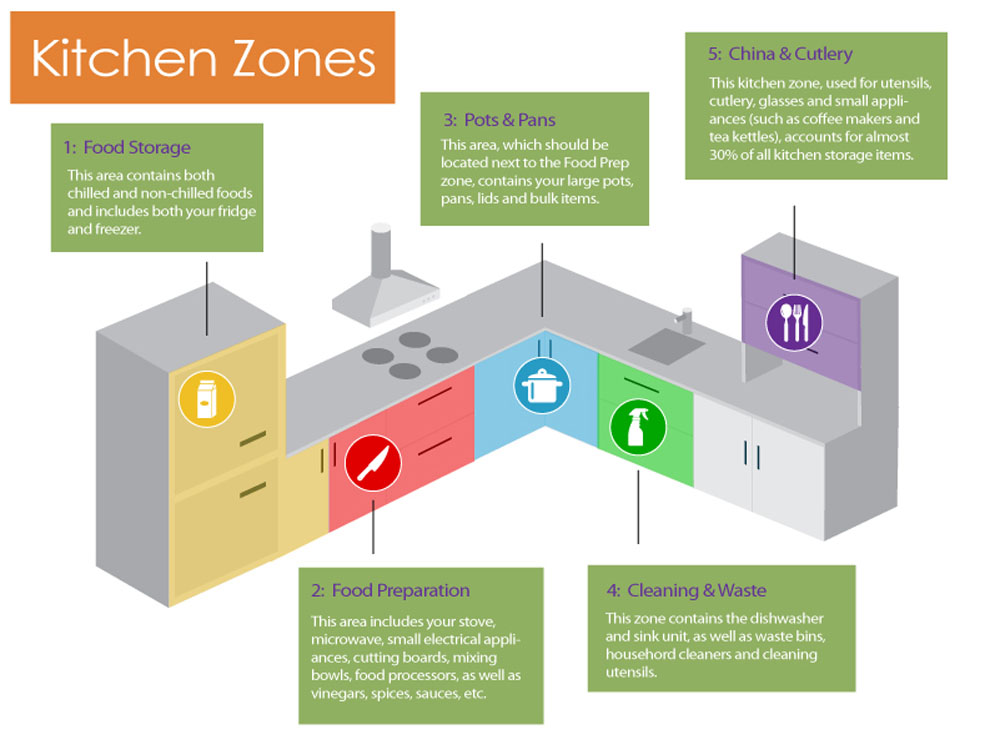
Effective kitchen organization groups items based on how and when you use them rather than arbitrary categories. Store baking supplies near your mixer, cooking oils next to the stove, and everyday glasses close to the dishwasher to create intuitive work zones that match your cooking flow. This strategic placement eliminates unnecessary movement during meal preparation, saving you hundreds of steps each week.
Within each cabinet, further organize items by frequency: position daily-use plates on the most accessible shelves while special occasion dishes can occupy higher or lower spaces. For spices, arrange them alphabetically or by cuisine type depending on how you cook—having Italian herbs together makes sense if you frequently make pasta dishes, while alphabetical order works better for general cooking. Utensil drawers should separate cooking tools from serving pieces, with frequently used items like spatulas and wooden spoons positioned front and center.
Consider your specific meal routines when creating these groupings. If you make smoothies every morning, keep the blender, protein powder, and favorite glasses together in one cabinet near the counter space where you prepare them. Parents might store kids’ plates and cups in lower cabinets they can reach themselves, reducing constant requests for help. This personalized approach ensures your organization system supports your actual habits rather than forcing you to adapt to someone else’s ideal.
Install Shelf Risers for Double Storage Capacity
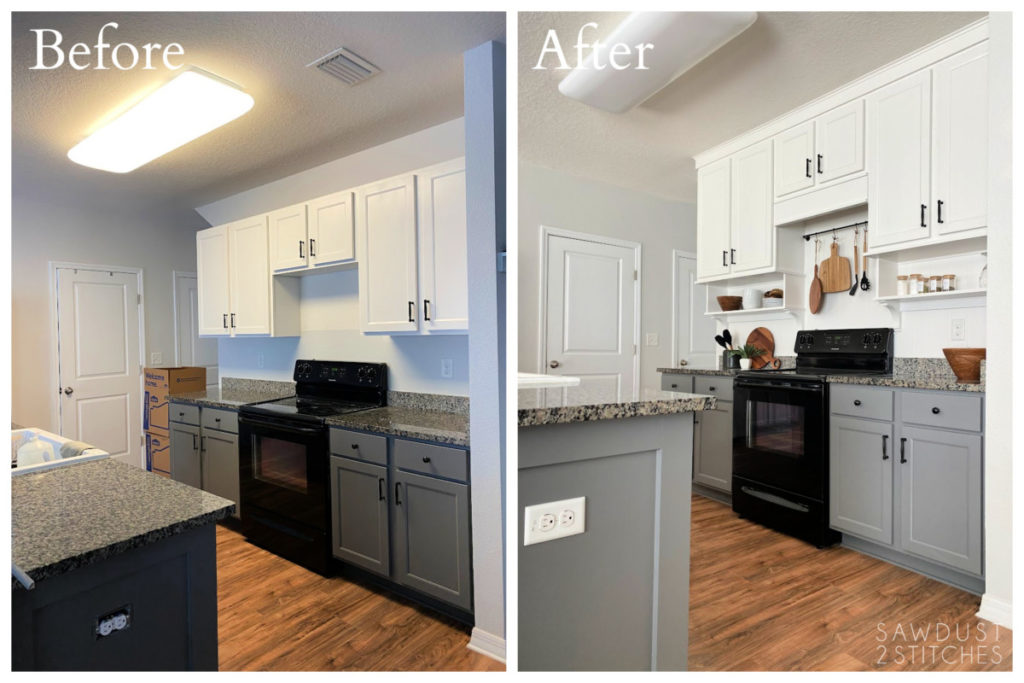
Standard cabinet shelving wastes valuable vertical space by leaving large gaps between shelves that accommodate only tall items while leaving room above shorter ones. Shelf risers solve this problem by creating an additional storage layer within each cabinet, effectively doubling your storage capacity without requiring cabinet modifications. These simple inserts work especially well for dishes, glasses, and food containers of varying heights.
Choose adjustable risers with non-slip surfaces that prevent items from sliding during cabinet door operation. For upper cabinets where reaching is easier, position heavier items like plates on the bottom level and lighter glasses above. In lower cabinets where bending makes reaching the back difficult, place frequently used items toward the front on both levels. Clear risers maintain visibility of all stored items, while wire models provide better air circulation for items like plastic containers that might otherwise develop odors.
For maximum effectiveness, combine shelf risers with consistent container systems. Store all food wraps, bags, and foil in matching bins that fit neatly on riser levels, creating uniform storage that maximizes every inch of space. This approach transforms deep cabinets from black holes where items disappear into highly efficient storage zones where everything remains visible and accessible.
Implement Drawer Dividers for Utensil Control
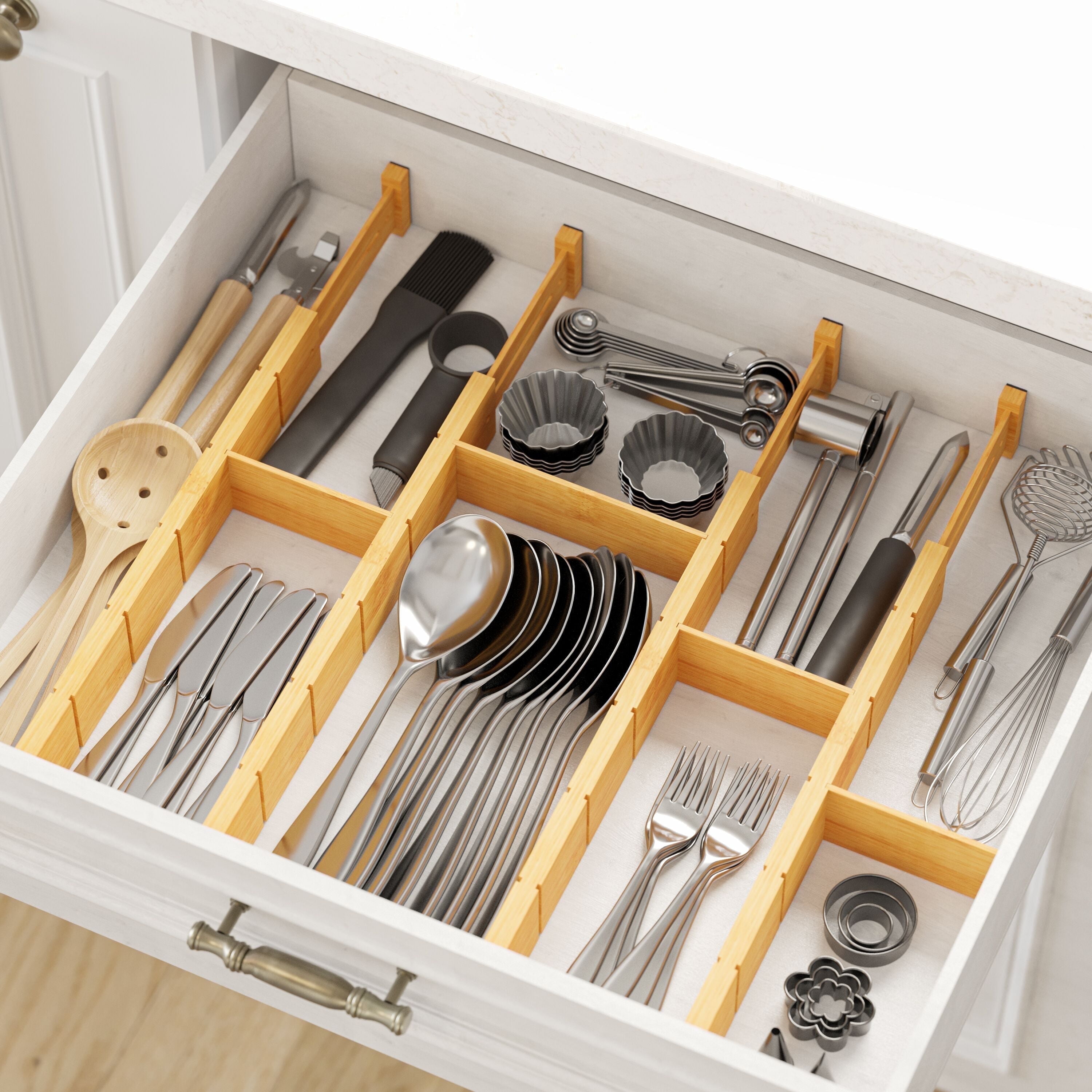
Utensil drawers without dividers become chaotic tangles where forks hide under spatulas and measuring spoons get lost among ladles. Quality drawer dividers create custom compartments that keep similar items together while making every piece instantly visible and accessible. Look for adjustable systems that expand to fit your exact drawer dimensions rather than fixed-size organizers that leave frustrating gaps along the sides.
For utensil drawers, create separate sections for cooking tools, serving pieces, and cutlery, with smaller compartments for specialty items like garlic presses or citrus zesters. In larger drawers that store baking sheets and cutting boards, use vertical dividers to keep flat items upright and accessible rather than stacked in unstable piles. Small bins within these drawers can corral kitchen gadgets like peelers and can openers that would otherwise roll around loose.
Consider adding felt lining to drawer organizers to prevent sliding and reduce noise when opening and closing. For households with children, create a dedicated section for kids’ utensils at the front of a lower drawer where they can easily access and return their own pieces. This simple addition encourages independence while keeping adult tools safely stored elsewhere.
Add Pull-Out Organizers for Deep Cabinet Access
Deep lower cabinets often become wastelands where items disappear to the back, only to be rediscovered months later when you’re searching for something else. Pull-out organizers mounted on smooth-gliding tracks bring everything into easy reach without requiring you to crawl inside or move items in front. These systems work particularly well for pantry items, pots and pans, and cleaning supplies that typically get buried in deep storage.
For lower cabinets, install tiered pull-out shelves that create multiple accessible levels within a single cabinet space. Heavy items like cast iron skillets or food storage containers belong on the bottom level, while lighter baking dishes can occupy upper tiers. In corner cabinets—the most challenging spaces to utilize effectively—lazy susans or pull-out swing systems rotate or slide items into view, eliminating wasted diagonal space.
Upper cabinets benefit from pull-down shelves that bring items from high spaces down to comfortable working height. This feature proves especially valuable for households with varying heights or mobility challenges, eliminating the need for step stools to access everyday items. For spice storage, consider narrow pull-out racks that mount inside cabinet doors, creating visible, accessible storage that keeps bottles organized and prevents spills.
Maintain Organization Through Simple Habits
Even the most thoughtful organization system deteriorates without consistent maintenance habits. Build brief weekly check-ins into your routine—just five minutes to return misplaced items, adjust shifted organizers, and remove anything that doesn’t belong. This small investment prevents the gradual chaos that requires complete reorganization every few months.
Create household-wide participation by making your system intuitive and clearly labeled. Family members are more likely to maintain organization when they understand where everything belongs and why. For frequently changing items like food storage containers, use clear bins with labels that indicate “lids” and “containers” to prevent mismatched pieces from accumulating.
Conduct seasonal reviews to adjust your system as your needs change. Summer might bring outdoor entertaining items that require temporary storage solutions, while holiday cooking seasons demand easy access to specialty bakeware. These periodic adjustments keep your cabinet organization relevant to your current lifestyle rather than stuck in an outdated configuration.
The best way to organize kitchen cabinets ultimately depends on your specific cooking habits, kitchen layout, and household needs—not expensive solutions or perfect Pinterest aesthetics. Start with one problem cabinet using these proven techniques, then expand your organized zones throughout the kitchen. Within weeks, you’ll notice less time wasted searching for items, reduced stress during meal preparation, and a kitchen that genuinely supports your daily life. Remember that effective organization isn’t about achieving perfection—it’s about creating a functional system you’ll maintain because it makes your life easier every single day. Implement these strategies consistently, and your kitchen cabinets will transform from sources of frustration into efficient storage zones that enhance your entire cooking experience.