That protruding wall in your kitchen isn’t a flaw—it’s a hidden opportunity waiting to be unlocked. A chimney breast, the structural remnant of a former fireplace, often appears as an awkward obstruction in modern kitchen layouts. Yet in thousands of period homes across the UK and beyond, this architectural feature holds untapped potential that can dramatically enhance both functionality and visual appeal. When you understand how to use a chimney breast in a kitchen effectively, you transform what many homeowners view as a renovation headache into the centerpiece of your culinary space. This guide reveals practical strategies for maximizing this unique element, whether you’re working with a spacious farmhouse kitchen or a compact city flat.
Rather than fighting against the chimney breast’s presence, savvy designers leverage its inherent advantages. The solid construction provides structural stability for heavy cabinetry, while the existing flue pathway simplifies ventilation installation. The projection creates natural depth variation that adds visual interest to otherwise flat wall surfaces. Most importantly, this historical feature offers distinctive character that mass-produced kitchen designs simply can’t replicate. By the end of this article, you’ll discover multiple approaches to integrate your chimney breast seamlessly into a functional, beautiful kitchen that honors your home’s heritage while meeting contemporary needs.
Convert Your Chimney Breast Into Strategic Storage
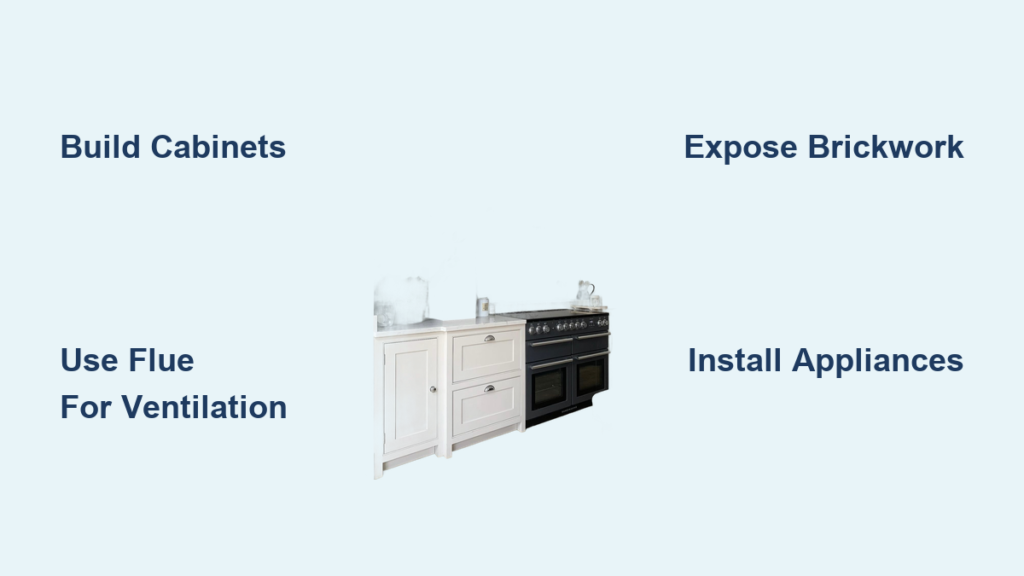
The chimney breast’s inherent depth creates perfect conditions for customized storage solutions that maximize otherwise wasted space. Build floor-to-ceiling cabinets that follow the breast’s contours to gain significant storage capacity without sacrificing valuable floor space. These units work particularly well for pantry items, bulky appliances, or specialty cookware that would clutter standard cabinetry. The breast’s natural projection provides ideal clearance for cabinet doors to swing freely without interfering with kitchen traffic patterns.
Create Open Shelving Display Areas Within the Breast Footprint
Floating shelves installed along the chimney breast’s edges offer accessible storage for everyday items while showcasing your personality through displayed ceramics, cookbooks, or kitchen tools. The four-to-eight-inch projection creates perfect spacing for these shelves—deep enough to hold multiple items yet shallow enough to maintain an airy feel. Opt for matte black metal brackets with reclaimed wood planks for an industrial look, or matching painted brackets for seamless integration with your cabinetry. Position frequently used items within easy reach of your main work zone to streamline cooking routines.
Implement Corner Storage Solutions That Eliminate Dead Space
The transition points where the chimney breast meets adjacent walls often create frustrating dead zones. Install lazy susans or pull-out corner cabinets to transform these awkward areas into highly functional storage. These rotating units provide complete access to every inch of space, preventing items from getting lost in deep corners. In compact kitchens, this approach can yield up to 30% more usable storage than standard corner cabinets. For maximum efficiency, dedicate one corner to spice storage and the other to baking supplies—keeping essential ingredients visible and within arm’s reach during meal preparation.
Optimize Your Ventilation System Using Existing Flue Infrastructure
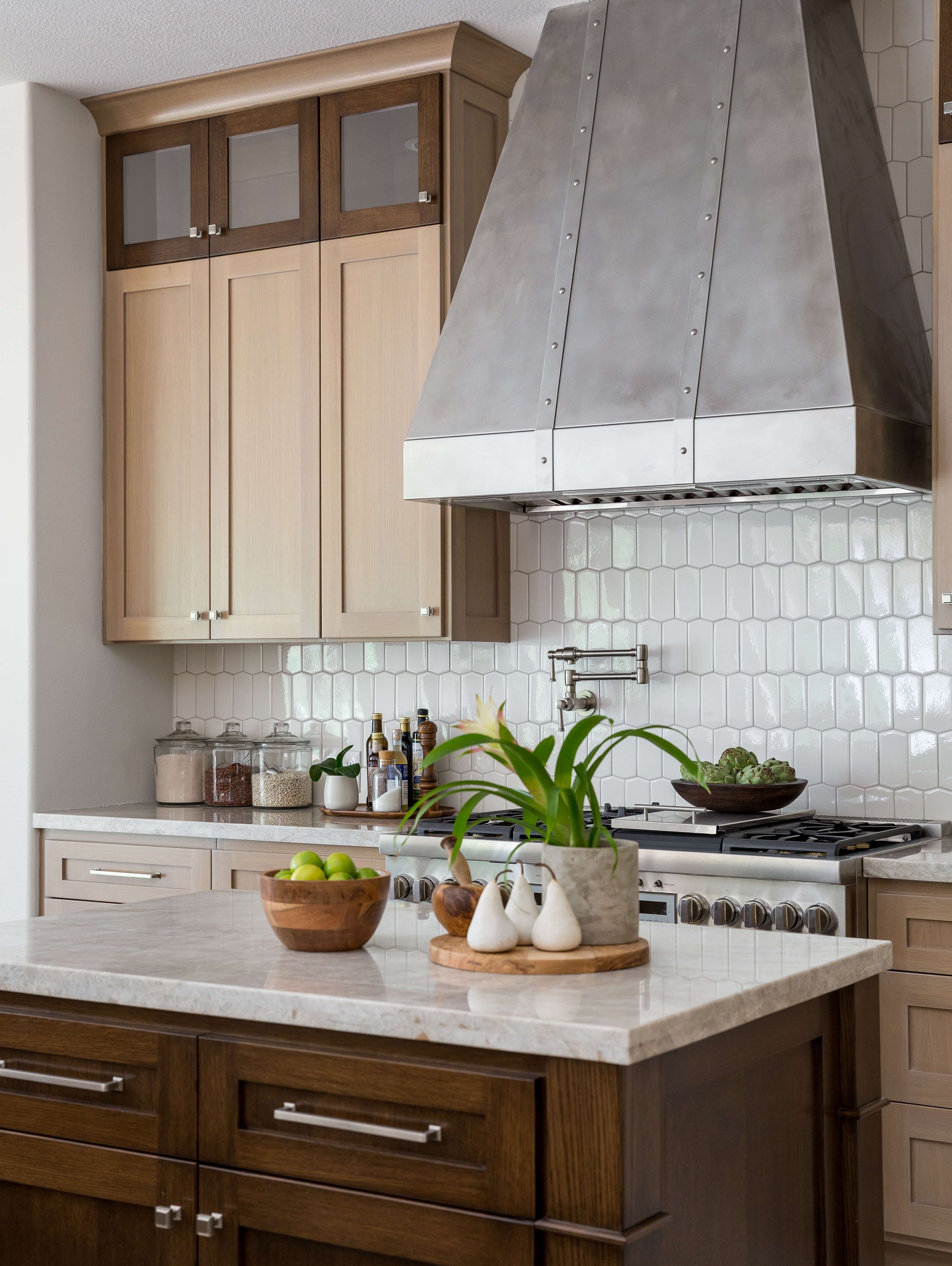
The original flue running through your chimney breast represents a major advantage for kitchen ventilation planning. Instead of cutting new ductwork through multiple walls and roof structures, utilize this existing pathway for your extraction system. Professional installers can clean and reline the original flue to create a direct route for your range hood, significantly reducing installation complexity and cost while maintaining optimal extraction efficiency.
Install Integrated Cooker Hoods That Blend With Cabinetry
Position your extraction system within the chimney breast’s footprint to create a seamless, built-in appearance that doesn’t dominate your cooking zone. Frame the hood with matching cabinetry fronts to maintain visual continuity throughout your kitchen design. This approach works especially well when the chimney breast interrupts a continuous run of wall units, allowing the extraction system to serve as a natural divider between cooking and food preparation areas. The breast’s structural strength provides excellent support for heavier extraction units without requiring additional wall reinforcement.
Maximize Extraction Efficiency Through the Original Chimney Termination
Terminating your extraction ductwork through the original chimney pot maintains proper draft while keeping duct runs as short as possible—critical for optimal performance. This configuration prevents grease buildup that occurs in longer, more complex ducting systems and reduces noise transmission throughout your home. When properly sealed and insulated, this setup meets all modern building regulations while preserving your home’s historical character. Annual professional inspections ensure continued efficiency and compliance with current ventilation standards.
Transform Your Chimney Breast Into a Decorative Focal Point

Expose and treat the original brickwork to showcase your home’s history while adding texture and warmth to your kitchen aesthetic. Professional cleaning removes decades of soot and grime, revealing the brick’s natural character, while sealing protects against kitchen moisture and grease splatter. This industrial-chic approach creates instant visual interest that pairs beautifully with both modern minimalist designs and traditional country kitchens. Accent the brick with strategically placed floating shelves holding copper pots or vintage kitchenware for added personality.
Apply Sophisticated Cladding Materials That Elevate Your Kitchen’s Style
Cover the chimney breast with natural stone, slate, or high-quality tile to create an instant focal point that anchors your entire kitchen design. These materials add texture and depth that draws the eye while providing a durable surface that withstands kitchen conditions. Pair stone cladding with quartz countertops and handleless cabinetry for a contemporary look, or combine with shaker-style cabinets and butcher block countertops for a more traditional aesthetic. The chimney breast’s projection creates natural shadow lines that enhance the material’s texture throughout the day as light moves across the surface.
Implement Statement Paint Treatments That Define Your Kitchen’s Character
Transform the chimney breast into an accent wall using bold paint colors that express your personal style without major structural changes. Deep emerald green, navy blue, or terracotta hues create dramatic contrast against lighter surrounding walls, making the breast the undeniable centerpiece of your kitchen. For a more subtle approach, use different finishes—matte versus eggshell—to create visual interest through texture rather than color contrast. This budget-friendly solution delivers maximum impact with minimal investment, allowing you to refresh your kitchen’s character whenever your style evolves.
Integrate Appliances Within the Chimney Breast Structure
The substantial depth of Victorian and Edwardian-era chimney breasts—often exceeding 12 inches—provides ample space to house built-in appliances that preserve valuable counter and floor space. Install wall ovens at ergonomic eye level within the breast cavity to reduce bending strain during cooking and baking. This configuration creates a dedicated cooking zone that keeps appliances clustered where you need them, streamlining your kitchen workflow while maintaining clear pathways through your space.
Conceal Refrigeration Units Within Custom Cabinetry
Build refrigerator and freezer columns into the chimney breast’s flanking cabinetry to create seamless appliance installations that maintain clean visual lines. The breast’s projection accommodates standard appliance depths while the surrounding cabinetry disguises the refrigerator’s presence, creating a unified appearance that blends with your overall kitchen design. This approach works particularly well in open-plan layouts where the kitchen flows into living areas, preventing the refrigerator from becoming a visual distraction in shared spaces.
Install Space-Saving Microwave Drawers and Warming Cabinets
Position microwave drawers and warming cabinets within the lower sections of your chimney breast configuration to keep these frequently used appliances accessible without occupying precious counter space. Concealed behind matching cabinet fronts, these appliances remain hidden when not in use yet emerge effortlessly when needed. This solution maintains your kitchen’s clean aesthetic while preserving full functionality for daily cooking routines. Install the microwave at a comfortable height to prevent strain during frequent use, particularly beneficial for households with children or mobility considerations.
Enhance Your Kitchen Ambiance With Strategic Lighting
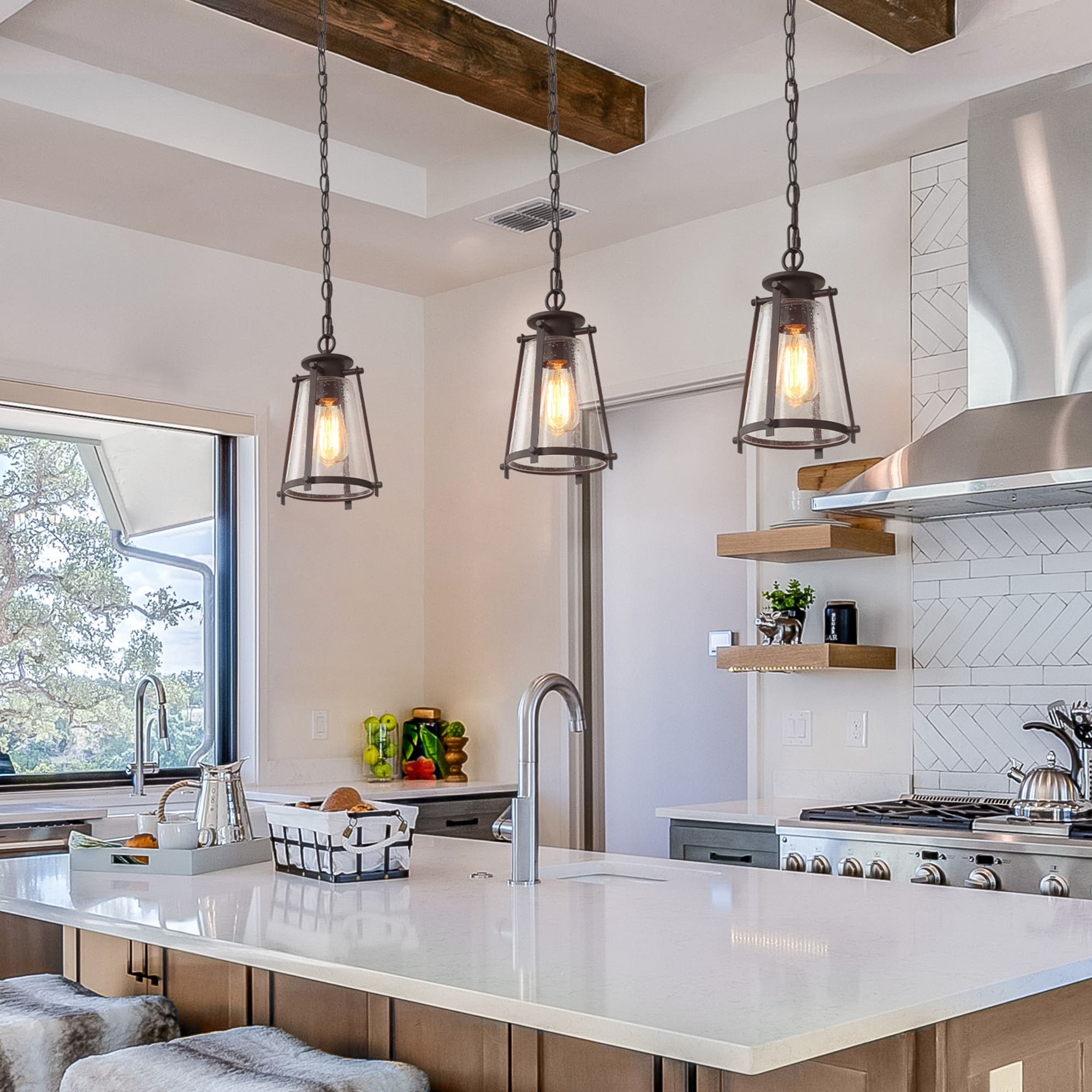
Suspend pendant lighting fixtures above your chimney breast to create focused task lighting for food preparation areas while establishing visual hierarchy that draws attention to this architectural feature. Multiple pendants in coordinated finishes create balanced visual weight that complements the breast’s proportions and enhances your kitchen’s overall lighting scheme. Position these fixtures to illuminate both the breast itself and adjacent work surfaces, ensuring adequate illumination for cooking tasks while creating inviting ambiance during meal times.
Integrate Recessed and LED Strip Lighting For Layered Effects
Install recessed lighting within the upper surfaces of chimney breast cabinetry to provide ambient illumination that softens the projection’s visual impact while ensuring even light distribution across your kitchen workspace. Combine this with LED strip lighting positioned behind floating shelves or within decorative recesses to create dramatic uplighting effects that highlight textural surfaces. This layered lighting approach adds depth and dimension to your kitchen, making the space feel larger and more inviting while showcasing the chimney breast as an intentional design feature rather than an architectural afterthought.
Maintain Your Chimney Breast’s Long-Term Functionality
Implement a regular inspection schedule to identify developing issues before they become costly problems. Check for cracked mortar joints, spalling bricks, or moisture staining that could indicate underlying structural concerns. Early detection allows for targeted repairs that preserve both the chimney breast’s integrity and your kitchen’s overall condition. Pay particular attention after periods of heavy rain or extreme temperature changes, when existing weaknesses often become apparent.
Establish Appropriate Cleaning Protocols For Your Surface Treatment
Develop cleaning routines tailored to your chimney breast’s specific finish to maintain its appearance and functionality. Painted surfaces benefit from regular dusting and occasional washing with mild detergent solutions, while exposed brick requires periodic inspection for efflorescence or biological growth. Sealed stone surfaces clean easily with appropriate stone care products that maintain protective finishes without causing damage. Address grease splatter promptly in cooking zones to prevent buildup that becomes increasingly difficult to remove over time.
Final Note
Transforming your chimney breast from architectural obstacle to kitchen asset requires creative vision combined with practical planning. Whether you choose to celebrate the feature with exposed materials, conceal it within seamless cabinetry, or exploit its structural advantages for ventilation and appliance housing, this historical element offers unique possibilities that standard kitchen layouts cannot match. By understanding the inherent advantages your chimney breast provides—from existing flue infrastructure to natural visual prominence—you can create a functional, beautiful kitchen that honors your home’s character while meeting your modern lifestyle needs. Start with one strategic modification, then build upon your success as your budget and vision allow—your chimney breast holds more potential than you might initially realize.